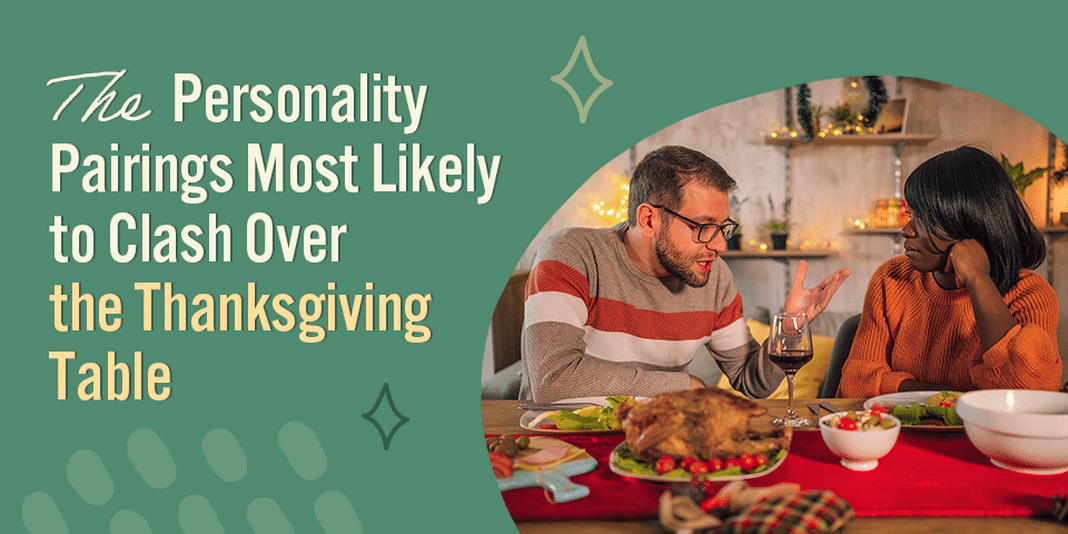
The Personality Pairings Most Likely to Clash Over the Thanksgiving Table
Thanksgiving. It’s a time to gather around the table, enjoy a delicious spread of food, and express gratitude for life’s everyday joys. That’s the goal, anyway. In reality, it can feel more like a pressure cooker of heated debates, not-so-subtle family judgements, and the occasional passive-aggressive remark that leaves you smoldering for days afterward.
While everyone’s family and friends are different, certain personality types have a truly hard time mixing. When these…let’s call them intriguing opposites…sit around the Thanksgiving table, it’s inevitable that horns will lock somewhere between the turkey and the pie.
ENTP and ISFJ: One Stirs the Pot, One Guards the Peace
When an ENTP and an ISFJ share a Thanksgiving dinner, the result can be almost comically dissonant. The ever-talkative ENTP loves an intellectual challenge, and this curious type often brings that energy to the table in the form of a debate. Open-minded and unconventional, they enjoy provocative, even taboo topics, and for many ENTPs it isn’t a family holiday until someone tosses a heated subject into the mix for fun.
ENTPs see these arguments as lively and good-natured, but the ISFJ is more conventional. They want to keep the peace and reflect on the blessings of the past year, and they find the ENTP’s desire to poke the bear distasteful and disruptive. Before long, the ISFJ might tell the ENTP to “read the room,” and the ENTP will protest that they “were just trying to liven up the conversation.”
INTJ and ESFP: The Schedule Meets the Showstopper
INTJs like predictability and plans, so Thanksgiving can already feel like a minefield. They’re happy enough once they find the uncle who loves an intellectual deep dive, or the family’s resident science geek. Ideally, though, the day runs to a set schedule. Arrive, steer clear of heated topics (especially politics), eat dinner, linger a little for dessert, then dip out early to head home.
Then there’s the ESFP, the entertainer of the family or friend group, who is all about spicing up the holiday. The ESFP often takes center stage with outrageous “true” stories, or rallies everyone for an impromptu game of charades right before dinner.
For the INTJ, these spontaneous delays can feel like a personal attack. Dinner was supposed to be at 5 p.m., and now it’s running late. Worse, when they try to sneak away for a moment of quiet, the ESFP appears out of nowhere and pulls them back into the fray.
A loud blowup at the table is unlikely (unless the INTJ reaches their limit). More likely, the INTJ stays irritated for the rest of the night and withdraws into themselves, saying far less than they otherwise would. The ESFP may pick up on these cues and call the INTJ a “spoilsport” or a “wet blanket,” which earns a cold, blunt reply and a running disagreement that lasts until the INTJ finally retreats.
ESTJ and INFJ: Blunt Critiques and Bruised Feelings
An ESTJ at Thanksgiving is a whirlwind of orchestration, even when someone else is hosting at their house! These dominant, hardworking supervisors love structure and hold fast to rules and tradition. When they see that Thanksgiving isn’t going “the right way,” they won’t hesitate to share their opinions on everything from the table settings and decor to the fact that nobody else brought a homemade dessert.
All of this comes from a good place. ESTJs show they care by getting things done, and they’re usually the first to roll up their sleeves and make sure everyone has a day to remember. Their good intentions are easy to miss, though, and their blunt commentary can rub the INFJ the wrong way, especially if they see it upset someone else. Remarks about traditions slipping, or about the host doing a “subpar” job, quickly get under the INFJ’s skin.
INFJs dislike conflict, but they will step in to defend a family member who seems stung by the remark. An argument over whether the ESTJ was rude can follow, and it rarely resolves. The ESTJ doesn’t see their comments as harsh or callous, and the INFJ won’t back down from defending a loved one’s feelings.
ESFJ and INTP: The Thoughtful Host and the Guest Who Wanders Off
Whether or not they’re hosting, the ESFJ of the bunch takes special care to look after everyone over the holiday. This warmhearted, nurturing type is highly attuned to other people’s needs, and they’ll eagerly pitch in to make sure the day goes off without a hitch. The ESFJ remembers everyone’s dietary preferences and politely volunteers to clean up after dinner.
All of this should make for a smooth evening. But when you add an INTP to the mix, their more detached nature, along with their tendency to overlook unspoken social expectations, can create friction for the ESFJ.
The INTP tends to find traditions a bit arbitrary and outside their scope, though any offense is unintended. Often absorbed in their own thoughts, they can lose track of time and turn up late to dinner. They might also question why everyone has to share what they’re grateful for, or slip away from the table more than once in search of somewhere quieter.
The ESFJ absorbs all of this with an internal wince, but their patience for what looks like a lack of consideration only stretches so far. They may try to draw the INTP into the group so nobody feels slighted by their absences. The INTP, meanwhile, may read these efforts as critical or controlling. Eventually, words may be had!
ENFJ and ISTP: Feelings First or Dishes First
An ENFJ acts as the group’s emotional coordinator and hype person. They want everyone to feel included and get along, and they’re especially sensitive to tension at the table. These warmhearted types see potential in everyone, which makes them natural mediators and often the first to notice when the energy feels off.
Say Aunt Isabelle makes a pointed remark about college student Rebecca’s career plans. The ENFJ immediately notices Rebecca has gone quiet and takes her aside to talk about how the comment made her feel. Rebecca probably just wants some space. As the evening goes on, Rebecca stays noticeably cold toward Aunt Isabelle. Unsettled, the ENFJ may try to get the other relatives to talk with Rebecca, then encourage Aunt Isabelle to apologize.
The ISTP heard the same remark, but decided it wasn’t their business. They want no part in a mediation session. They’d prefer the family focus on what needs doing, like clearing the dinner plates and getting dessert ready. When the ISTP says, “It’s not my business or my problem,” the ENFJ may keep pressing until the ISTP feels pulled into an unwanted group heart-to-heart. All they want is to get Thanksgiving dinner done and dusted. From here on out, the tension between them is palpable, as neither can quite accept the other’s point of view.
Why the Same Relatives Clash Every Year
Thanksgiving is notorious for cringey political debates and for that one aunt who always asks the same cousin whether they’re still single. It’s probably the most memed holiday for painful table talk, so rest assured, it isn’t just your family!
While personality is only one ingredient in the clash—family history and holiday stress play their part too—different motivations and perspectives can certainly contribute to communication breakdowns. Knowing which types tend to butt heads may help you understand why certain relatives seem to clash every single year, even if it can’t head off every disagreement.
Often, it comes down to differing views on which topics are fair game and how the day should run. One person wants to liven up the conversation with a debate, while another sees debate as a threat to their peaceful food coma. One relative is watching the oven timer like a hawk, while another is busy organizing a family football game in the yard.
No personality type is destined to ruin your Thanksgiving dinner. It all comes down to juggling everyone’s differences and quirks. You can always try a few tactics to promote peace this year. But even if the day turns into a dumpster fire, at least there’s always pie.


