How to Handle Your Family's Personality Types Over the Holidays
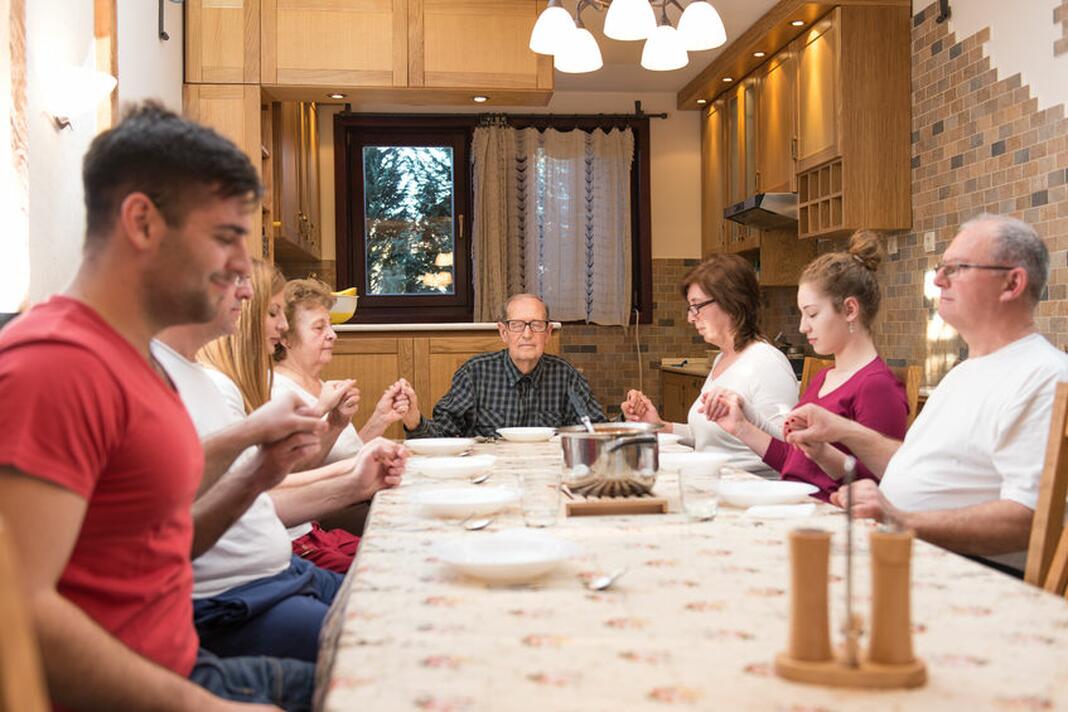
Picture the scene. The whole family is home for the holidays. Turkey in the center. Questionable casserole on your left. Immediate family and in-laws sit inches apart at the long, rarely used dining table, and the family group chat is buzzing with photos of the food you’re all eating. It seems to be going well. Then it starts.
5:04 p.m. Your ENTP cousin decides to ask your INTJ uncle whether AI is coming for everyone’s jobs. You breathe a sigh of relief. At least they didn’t bring up the midterms.
5:09 p.m. Your INFP aunt is silently freaking out at the first sign of conflict. You want to remind her that bickering is normal and it isn’t her job to keep the peace, and you wonder whether it would be weird to text her that under the table.
5:12 p.m. Your INFJ sister has barely said a word. You can’t tell whether she’s happily listening. Or just not into the small talk. Or silently judging every one of you, with notes.
These family dynamics are completely normal, and I’m here to help you navigate the beautiful, and sometimes chaotic, mesh of personality types over the holidays. The key to understanding your family is recognizing that the same behavior can mean very different things depending on the personality type it comes from.
With that in mind, we’ll go around the table and take a fresh look at the groups. Two of the four Myers-Briggs dichotomies tend to cause the most friction around a holiday table. Thinking versus Feeling shapes how people argue and how they respond when tensions are rising. Introversion versus Extraversion decides how long anyone can stand to be in the same room. Those are the two we’ll be paying attention to.
Thinking vs. Feeling: Why the Same Argument Lands So Differently
Everyone fears the annual holiday family argument. For now, imagine that it starts with a debate at the dinner table. How might our Thinkers and Feelers respond? The two groups are usually easy to tell apart, since the Thinkers are arguing with gusto, and the Feelers are cringing into their mashed potatoes. Within each group, though, the differences are subtler, and that’s where most of the misunderstandings start.
The Intuitive Thinkers Who Love a Good Debate
Mark the Intuitive Thinkers first (INTJ, ENTJ, INTP and ENTP). You’ll hear them countering every argument and unearthing every remote logical fallacy in someone’s opinion. You might think they’re scoffing at you because your two cents wasn’t an airtight case ready for appellate court.
However, while they all communicate similarly, they perceive people differently, and “perceive” is the pivotal word.
For an ENTP, a bit of quick-witted verbal sparring over dinner is like adding pumpkin spice to the cheesecake. They see debate as a meeting of minds, and they’d love to hear your opinions as much as they love voicing their own. If an ENTP says something insensitive, it’s pure absent-mindedness from someone carried away by the fun of it all. What better way to toast the New Year than hearing everyone’s most controversial take on whether college is still worth the money?
Your INTP brother enjoys the debate just as much, and he may listen in for a while. Then, somewhere around dessert, he’ll deliver a ten-minute correction of a point everyone else has forgotten, then wander off to the couch before anyone has a chance to reply.
As for the person deliberately pointing out your inconsistencies, that was your INTJ uncle or your ENTJ sister-in-law. XNTJs hold firmly to their convictions, and they’ll likely let you know if anything you say contradicts the convictions you’ve already stated. They don’t mean to hurt your feelings, it’s just that complete honesty is one of their core values. To quote Mr. Darcy, the dashing INTJ of £10,000 a year, “disguise of every sort is my abhorrence.” Oh, and ENTJs like an argument to go somewhere, so don’t be surprised if your ENTJ sister-in-law wraps up the discussion with a plan to fix the problem, complete with assigned roles.
The Sensing Thinkers Who Fix the Problem First
Departing from their Intuitive cousins, Sensing Thinkers (ISTJ, ESTJ, ISTP, ESTP) put their good “sense” and quick thinking skills to work on hands-on problems, and they’re happy to leave the debating to others. An ISTP might be the first to spring into action and put out a fire in the oven. If the smart TV refuses to play Grandma’s photo slideshow, the ISTP is probably already behind it with a cable. An ESTJ might come up with and supervise a buffet system if everyone is scrambling around serving their festive side dishes. They still enjoy spending quality time with the family as much as the next person, but if a job needs to get done, they might put the job first.
The Extraverted Feelers Who Entertain and Organize
We now usher in our Intuitive and Sensing Feelers, the family’s peacekeepers and the people most likely to start singing and swaying to “Auld Lang Syne.” Don’t get me wrong. I’m not blaming the Thinkers alone for starting a scene. Feelers can be extremely sensitive to criticism and can easily take things the wrong way. A Feeler is just as likely as a Thinker to start an argument; the only difference is, they prefer to do it one-on-one, away from a large group like a family reunion. With that disclaimer aside, it’s time to get to know the Feelers of the family.
The Extraverted Feelers love to tell stories and entertain, especially the Perceivers. With an ESFP or ENFP at the table, you’ll probably hear countless dramatized versions of how they heard sounds in the middle of the night and were about to go full on Home Alone I, II, and III before realizing it was just a bird that flew in. They may even have the doorbell camera footage to prove it.
ESFJs and ENFJs, on the other hand, with their crack-shot leadership and organizational skills, can come across a little bossy at events where everyone has an opinion on how to stuff a turkey. Remember, they just want to help because they’re natural givers. It’s not their fault if they naturally give a little too much input. They’re also the ones who set up the shared spreadsheet for who’s bringing which side dish.
The Intuitive Feelers Who Feel Every Bit of Tension
Throw Intuition into the mix and your Feeler may start to crumble under the social tension. With their strong empathy, Intuitive-Feelers (NFs) quickly gather who isn’t having a good time. Conflict stresses them out, and they’re likely to overthink the problem. Your INFJ sister may step out of the room if a large-scale controversy brews, since she’s been soaking up everyone’s feelings since the appetizers and has officially hit capacity. Your INFP aunt and any ENFJs at the table will generally try to smooth things over. Families can’t survive without their peacekeepers, but the peacekeepers should perhaps be encouraged to remember that each family member is free to do their own thing. Social harmony is part of family love, but a break in harmony doesn’t take that love away.
Introverts vs. Extraverts: Who Runs Out of Energy On a Long Family Day?
Every Thinker and Feeler at the table is also an Introvert or an Extravert. Their Thinking or Feeling preference shapes how they handle the argument. Their Introversion or Extraversion decides when they run out of steam.
Let’s put the Introverts under our microscope first. You know a few. Some are deep in one-on-one conversations while others tend to keep to themselves. And some are just the life of the party.
What? Introverted? That guy turning the cranberry sauce into a strange form of sangria and offering it to the twice-removed cousins? Surely your ISFP brother-in-law can’t be an Introvert?
It’s a mistake to think that all Introverts are quiet, unassuming types. Like every Introvert, the cranberry-sauce guy recharges his social battery by being alone. He charges it so well that he can go for hours enjoying other people’s company. Just don’t mistake him for an Extravert. When he wants to rain check Monopoly and head home, let him. He isn’t being rude. Like the family members having quiet conversations, he needs his alone time to keep being the awesome Introvert that he is.
Then there are the classic Introverts, the people of few words. Your ISFJ grandma has been tending the gravy since noon, and she’ll volunteer for every round of dishes. A sink full of plates is the perfect excuse to step away from the crowd while still taking care of everyone. These Introverts don’t necessarily want to stand by themselves in a corner (unless they’re perusing your bookshelf; if you have an extensive J.R.R. Tolkien library, you have to let people soak it in and be amazed). But they won’t appreciate being pushed into a crowded circle, either. Why not talk to them one-on-one for a bit? More than anyone else in the room, the Introverted relative may want to hear about your existential dissatisfaction at work and your secret dreams about radically changing careers. Let them open up to you as well. A quiet, deep talk with an Introverted soul is unlike anything else. Just skip the small talk. Hearing too much about ghastly weather and backed-up traffic grates on the Introverted soul.
The Extraverts, meanwhile, are only getting warmed up. They recharge by being around people, so a long day of family can leave them with more energy at 9 p.m. than they had at noon. Your ENTP cousin will happily restart the AI debate over leftovers, and your ENFP niece has at least three more stories to tell. If an Extravert starts to flag, they probably need someone new to talk to. Just don’t take it personally when the Introverts decline round two.
What the Holidays Reveal About the People You Love
Overall, your family reunion presents a brilliant web of connections. Look closely, and you’ll see how interactions with different personalities can bring out different sides of the same person, like a unique filter on someone’s soul. You’ll observe how two seemingly different personalities make long, healthy marriages, or how different siblings can be. You’ll see how each family member has shaped you into the unique person you are, and how you’ve shaped them into the unique people they are. These opportunities should lead you through a process that Victorian author Elizabeth Gaskell described as “becoming acquainted with each others’ characters and persons, and even tricks of temper and modes of speech. [You] should understand each other better, and I’ll venture to say [you] should like each other more.”


