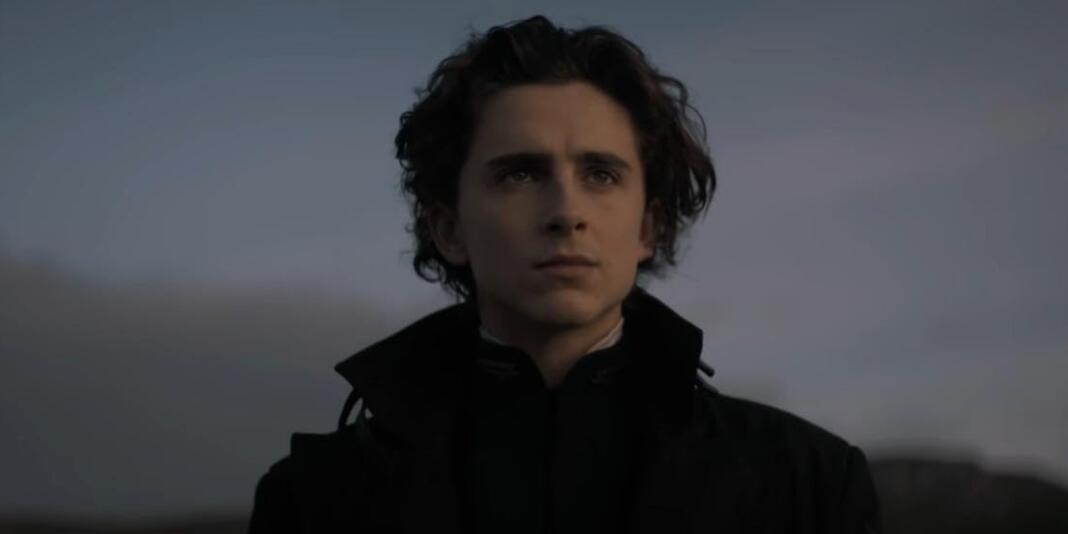
Death of the Softboy: Was Timothée Chalamet Ever Really an INFP?
Photo courtesy of IMDB.
I want to talk about Timothée Chalamet, the softboy himself. The grip that this man had on both movie critics and women all around the world was, and is, genuinely astonishing. For a solid decade, he functioned as the embodiment of “sensitive masculinity,” a uniquely sincere and anti-macho brand of malehood typically associated with INFP men. But recently, while his role choices are still great, people aren't posting “yearning” memes about him anymore. The internet's collective crush seems to have cooled. Why is that?
It seems like the “dreamer” boy who used to read poetry at breakfast has turned into someone who cares less about the love of his craft and more about his own legacy. And I must admit, I don't recognize the guy.
It's not just the unflattering haircut and the wispy mustachio that he’s been sporting for a while now; it’s that something in the texture of him has changed. He doesn’t feel like the melancholy theater kid who’d just wandered out of a French coming-of-age film anymore. Which makes me wonder: have we spent a decade projecting the INFP personality type onto Timothée based on his on-screen characters, while the actual man has always been operating from a completely different set of letters?
The Making of a Healer
When we make educated guesses about celebrities’ Myers-Briggs types, we basically take their public persona and extrapolate from it. We don't know the real people behind the branding. We only know the version of them that survives public consumption. And ever since Timothée Chalamet first showed his pale face in the public eye, he's been projecting extraordinarily INFP-coded behavior:
- His role choices. Beautiful Boy. Lady Bird. Call Me By Your Name. Wonka. Every one of these projects centers on vulnerability and the emotional complexity of one’s inner life—exactly the kind of material an INFP is drawn to.
- His artistic roots. His grandmother, mother and sister all danced in the New York City Ballet. Surely this type of upbringing must have contributed to his developing greater artistic sensitivity than if he’d grown up around stocks and deal-making?
- His public persona. He’s soft-spoken, philosophical, reflective. Prone to speaking in the language of “feeling.” When asked if he believed in fate in a Dune interview, he casually responded by dropping a quote from Invictus: “You could be the master of your fate, you could be the captain of your soul. But you have to realize that life is coming from you, and not at you. And that takes time.” Compare that to the average Marvel press tour, and the contrast speaks for itself.
- His style. Tousled curtain hair, androgynous silhouettes, a wardrobe that borrows freely from both ends of the gender spectrum like the backless haltertop he wore at the Venice Film Festival and the shirtless cropped lace blazer look at the 2022 Oscars. His fashion choices seemed to scream “I’m a sensitive artist!”
We all saw it. You don’t have to be a personality type expert to see that pattern. It felt obvious.
Or so we thought.
The Cracks in the Image
I'm not going to make this about Kylie Jenner's alleged bad influence, because I'm quite sick of the public blaming women for whatever is going on with a man. But the shift is traceable back to the beginnings of their relationship. At the rumor of their dating, the internet was swarmed with memes suggesting the relationship was a PR stunt to promote Wonka because everyone got the collective, instinctive sense that the pairing simply didn’t “fit.” Not because there was anything wrong with Kylie, but because why would a sensitive introvert step into a world of reality TV stars and relentless self-promotion?
Something didn't add up.
Then came the statements about “greatness”. At the 2025 SAG Awards, accepting for A Complete Unknown, he told the room: “I'm really in pursuit of greatness. I know people don't usually talk like that, but I want to be one of the greats. I'm as inspired by Daniel Day-Lewis and Marlon Brando as I am by Michael Jordan and Michael Phelps.” Not bad on its own—ambition is fine, ambition is good—but these are not the words of someone whose primary relationship with their craft is emotional and inward. This hunger for “greatness” just doesn't sound very INFP.
And then, finally, there was the Matthew McConaughey incident. At a CNN/Variety town hall, Chalamet said he didn't want to be working in ballet or opera, “things where it's like, hey, keep this thing alive even though no one cares about this anymore." My feeling is that he was performing for the room, probably a little giddy in McConaughey's presence, and he knew immediately he'd overstepped, joking that he'd just lost “14 cents in viewership.”
But it landed HARD—more than 14 cents, I’d argue. This is a man raised backstage at one of the world's great ballet institutions, by women who gave their lives to that art form. And he dismissed it based on audience metrics. Classical arts are like rare birds—fragile, irreplaceable, in need of protecting. Hearing anyone reduce them to a popularity contest is jarring. But hearing it from him was a genuine shock.
Because an INFP would never. This type doesn't filter art and beauty and creativity through stone-cold market logic; they’re too values-driven and unconventional for that. Unless he's actually not an INFP.
Two Theories
I have a couple of competing explanations for what might actually be going on, and they lead to very different conclusions about who Timothée Chalamet is underneath the public image.
One is that he genuinely is an INFP going through a growth phase. The Timothée we see today is still Timothée, just a mature, grown-up version of a man who’s finally pushing back against a decade of “soft boy” projection.
The other is that he was never an INFP to begin with, and what we read as INFP energy is essentially Elio from Call Me By Your Name wearing Timothée's face.
The INFP Growth Phase
Timothée was 19 when he broke through, and 19-year-olds don't always know who they are. What they do know—or at least, what Timothée seemed to know—is what gets them into rooms where it happens. And what got Chalamet into rooms was the bone structure, the ballet family, the Proust references—the whole sensitive-boy package. So he leaned into it, and the public brand was established while the actual person had yet to form fully.
Now he’s 30, and maybe after all those years of being shoved into a box built for him when he was still a teenager, he’s no longer comfortable with this image. The “greatness” speeches, swapping the backless top for an orange sweatsuit, the McConaughey incident—this might be what happens when an INFP who's been performing a pre-approved version of themselves is breaking out of the chains. An overcompensation if you will.
In some ways, it makes me think of Justin Bieber. Bieber was also given an image and turned into a symbol while he was still just a teenager, and he went through a phase where he seemed to deliberately make himself uglier, as a backlash against the objectification he'd been subjected to since adolescence.
But there's another explanation that has nothing to do with burnout or rebellion. INFPs are idealistic and empathetic, but they don't stay soft-spoken forever. As they mature, and actively start developing their least-favored Introverted Sensing and Extraverted Thinking functions, they do tend to become more vocal, boundary-setting and willing to take up space. What looks like overcompensation from the outside might simply be maturation from the inside. It’s really not unusual for INFPs to have an “identity awakening.” Maybe the boy just grew up.
He was never an INFP
The problem I have with the “growing INFP” analysis is Timothée’s comment about the arts. INFPs might become more vocal and assertive as they mature, but they don't tend to lose their entire value system. If anything, they develop a deeper awareness of what matters to them and stand up for those convictions with real-world, practical actions.
Which leads to my (unpopular) theory—Timothée was never an INFP, but actually an ENTJ.
Stay with me, because the ENTJ case becomes convincing when you trace it back:
- Red carpet shownmanship: First of all, I’d challenge the whole introvert thing. Yes, in some interviews he comes across as awkward, shy and private. But, if we compare him to someone like Cillian Murphy, whose discomfort with the spotlight is so legendary it’s become a meme, Timothée seems like a social butterfly. He takes selfies on the red carpet, chats with fans, dresses for the cameras. In talk show appearances, such as his viral, free-wheeling interviews on The Graham Norton Show, he demonstrates a high degree of sociability, quick wit, and the ability to command a room. As far as I'm concerned, he’s an extravert, just not Chris Pratt style.
- The poetry: Remember when I said he quoted Invictus? It’s not only that he quoted the poem, it’s which line he quoted: I am the master of my fate, I am the captain of my soul. What does that sound like to you? Maybe it’s just me, but there’s a case for ENTJ here.
- The “greatness” speech: The SAG Awards speech is such an ENTJ thing to say, it’s almost funny. But it’s worth noting when he made this speech—not in some obscure radio interview but on the SAG Awards stage, in front of the entire industry. Whether people agreed with him or not, he made sure everyone heard it.
- The “sensitive artist” roles: Chalamet is often framed as the indie darling who followed his artistic instincts, but that's not exactly what happened. He wanted a big action-movie role in The Maze Runner and Divergent but lost out because casting directors felt he lacked the physique for an action lead. So it's not like he was always leaning indie. In fact, it’s clear that his role choices were highly strategic. He chose the path that was available to him, and broke through during a very specific cultural window: post-Twilight, post-Fifty Shades, at a moment when there was a genuine appetite for a different kind of masculinity. His public image fit the demand for sensitive, vulnerable men perfectly, and it was an incredibly effective market position.
- The need to dominate. Chalamet doesn't disappear into obscure passion projects or low-audience experiments the way that actual INFP Robert Pattinson often does. Dune, Wonka, A Complete Unknown—all of those choices scream, “I want to be a movie star, and I want to win an Oscar.” And there's another detail that keeps nagging at me. When Chalamet talks about greatness, he doesn't only reach for actors as points of comparison. He placed Michael Jordan and Michael Phelps alongside Daniel Day-Lewis and Marlon Brando. That's an unusual combination. Jordan and Phelps aren't exactly remembered for emotional authenticity—they're remembered for domination. For discipline. For winning. When Chalamet imagines the highest version of himself, his mind seems to jump naturally to elite performers who treated excellence as a competitive pursuit. That's a very different value system from the stereotypical INFP obsession with authenticity.
- Stone cold efficiency. Which brings me back to the ballet controversy. What interests me isn't the backlash itself, but the thought process behind the comment. Chalamet didn't dismiss those art forms because they lacked beauty or artistic merit. He dismissed them because they don’t generate enough revenue. Whether you agree with him or not, that's a very results-oriented way of looking at the world.
None of this is necessarily proof that Chalamet’s an ENTJ. But if you stop looking at the aesthetic and start looking at the behaviors, ENTJ suddenly becomes a lot easier to see.
Which Personality Is It?
So which group does Timothée fit better:
- George Clooney, Harrison Ford, Mindy Kaling, Jamie Foxx?
- Or Andrew Garfield, Keanu Reeves, Lisa Kudrow, Chadwick Boseman?
I think he fits the first group of ENTJs. People tend to focus on the poetry references, the fashion, the emotional performances, and conclude that he must be Elio. But you can be an artist and strong-willed. You can be creative and ruthlessly ambitious. And the more Timo speaks, the less he sounds like someone concerned with authentic self-expression and the more like someone focused on mastery and achievement.
Maybe exposure to the Kardashian-Jenner clan gave him some perspective and nudged him toward what he's actually wanted all along? I'm just speculating, but the harder you think about it, the more sense it makes. Maybe his upbringing conditioned him to stay humble and prioritize the craft—while deep down he always wanted to become truly great, to replace DeNiro (he said something along those lines in an interview). And maybe being with Kylie showed him that asking for what you want, openly and unapologetically, isn't so bad after all.
And let’s remember, he's 30. He's still evolving as an actor and as a person. If the man underneath the Healer turns out to be a Commander, that's not a loss. ENTJs at their best are visionary and completely uncompromising about the work, which means we're up for some cinematic treats in the coming years. And if he's the INFP after all, that’s also great. I’m a big fan of growth and authenticity; of throwing off the shackles of an identity that no longer resonates. And there are much worse fates than simply becoming yourself.
Milena J. Wisniewska is an Ireland-based relational health and spirituality writer. She holds a Master's in International Relations and worked as an account manager at a tech company before quitting it all to become a full-time Carrie Bradshaw. An ENXJ who's yet to nail down her type, she's the blunt-but-hilarious bestie you turn to for compassionate wisdom. She's also a full-time surfer, movie buff, bookworm, and a self-proclaimed tortured artist — always with a notepad, always scribbling something down.


